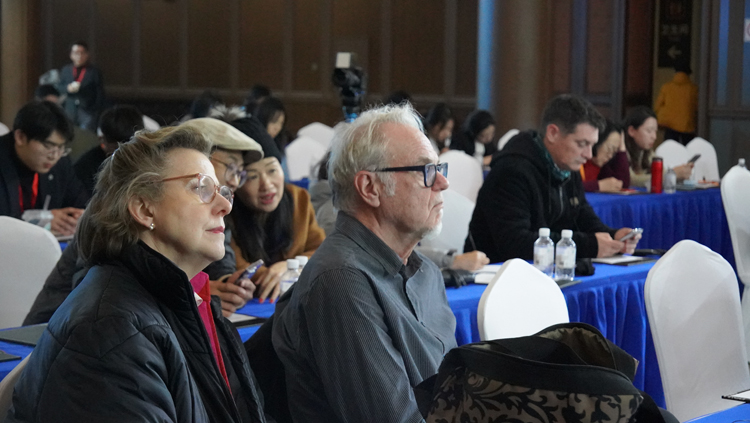
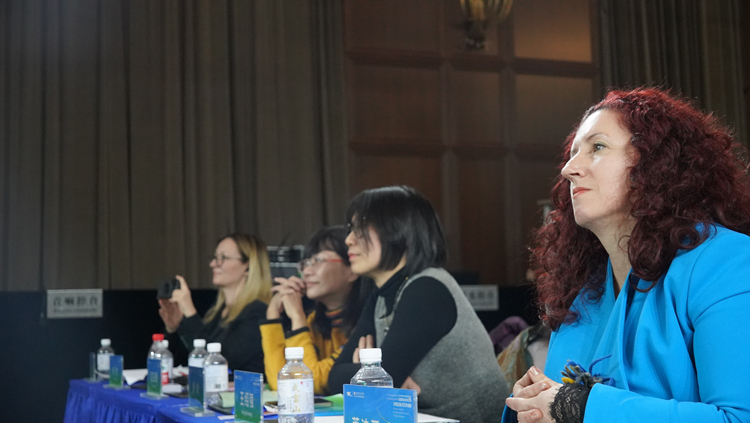
The First International Art Conference of the Beijing International Art Biennale was convened at the Beijing Exhibition Center on December 29th and 30th. It gathered art theorists, heads of art institutions and academies, curators, and artists from various countries around the world. Mr. FAN Di’an, President of the China Artists Association (CAA), and Mr. QU Jian, Secretary of the Party Leadership Group and Executive Vice Chairman of the CAA, addressed the opening ceremony, which was presided over by Mr. ZHU Hongzi, Member of the Party Leadership Group, Deputy Secretary-General, and First-Class Inspector of the CAA.
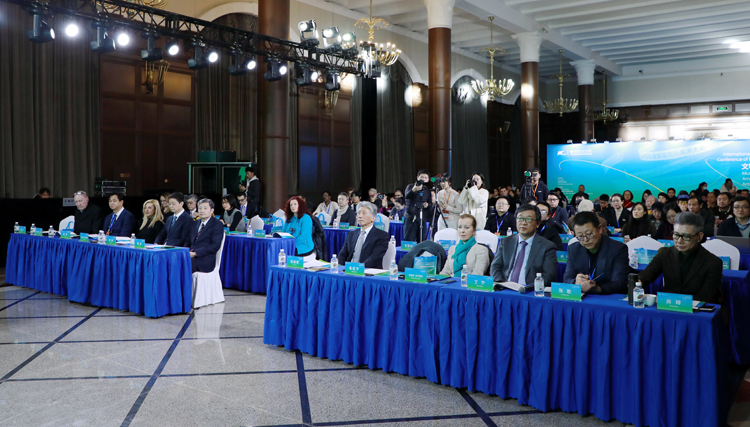
This conference, themed “Mutual Learning among Civilizations and Artistic Innovation”, has thoroughly implemented the Global Civilization Initiative put forward by President Xi Jinping. Upholding a concept of civilization characterized by equality, mutual learning, dialogue, and inclusiveness, it was dedicated to strengthening international cultural exchanges and cooperation, gathering vitality for artistic innovation, and contributing cultural strength to promoting dialogues on fine arts between China and other countries in the world and advancing the building of a community with a shared future for humanity. The conference featured three sub-topics: “Harmonious Coexistence and Shared Beauty: Artistic Expansion in Local Traditions and from International Perspectives”, “Fluid Contemporaneity and the Construction of Cultural Identity”, and “Artistic Ecology and Future Development in the Digital Intelligence Era”. It brought together guests from more than ten countries across five continents, including China, the United States, France, Italy, Serbia, the Czech Republic, Albania, Egypt, Australia, and South Korea, who participated in keynote speeches and round table discussions. Additionally, several guests from Global South countries attended the conference. Building on their expertise and research directions, Chinese and international guests focused on practical issues, offering targeted and feasible ideas and suggestions aligned with the conference’s theme and sub-topics. Through rational discussions, they fostered consensus and shared understanding.
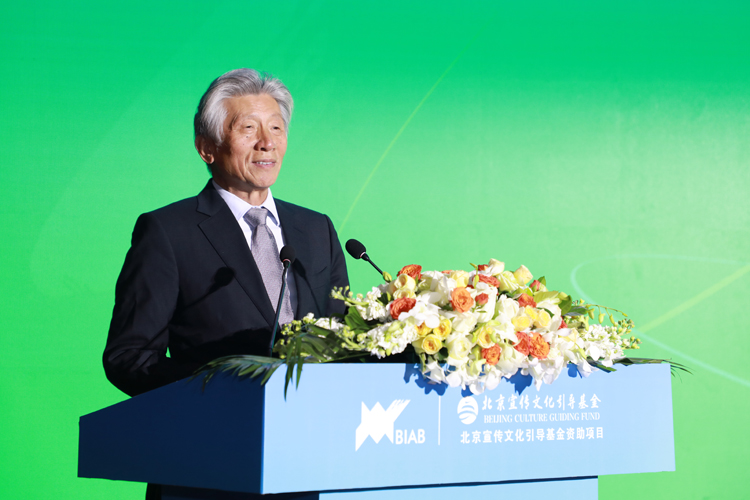
FAN Di’an delivers speech
In his speech, Mr. FAN Di’an pointed out that the convening of the International Fine Arts Conference of the Beijing Biennale serves as a crucial opportunity to analyze, assess, and elaborate on the contemporary landscape, key issues, and methodologies of art. It also represents a new focal point for envisioning and deepening international artistic exchanges. Global contemporary art has entered a new international context, where the pluralistic development and diverse expressions of art shine in different ways through mutual stimulation and integration. Therefore, upholding the concept of cultural diversity and fostering common development through the convergence and intersection of artistic ideas and approaches is a prerequisite for art to revitalize. Held in conjunction with the Beijing Biennale, this conference aims to build a high-level dialogue platform given profound shifts in the global art landscape and the reshaping of creation ecosystems by digital technology and artificial intelligence. It seeks to produce a series of original academic achievements with international influence, advance the development of China’s contemporary art discourse system, and promote the deep integration of art with technology, ecology, and society.
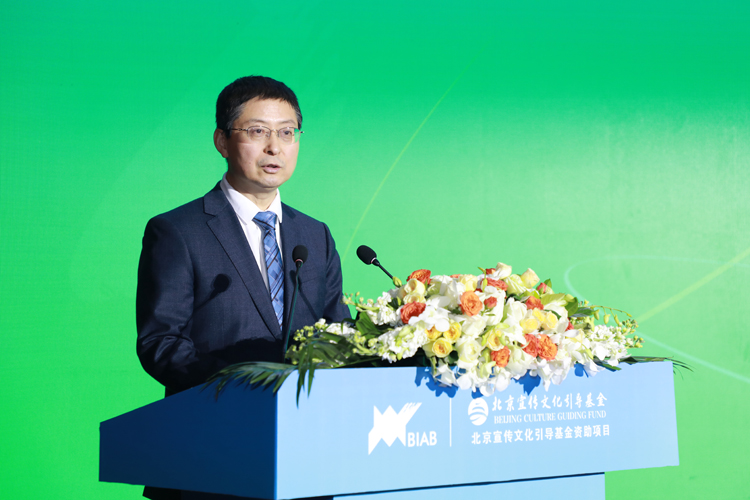
QU Jian delivers speech
In his speech, Mr. QU Jian emphasized that the topics of this conference are both profound and forward-looking, delving into contemporary transformations of traditional art, the construction of cultural subjectivity, and cutting-edge issues such as the integration of technology and art. The discussions focused not only on the innovative opportunities brought by technological empowerment but also reflected on its potential challenges, thereby building a comprehensive academic framework. He hoped that all experts and scholars would adhere to academic principles, engage in honest exchanges, embrace openness and inclusiveness, learn from one another, draw wisdom through dialogue, and achieve improvement through mutual learning, truly realizing the principle of “appreciating the beauty of each and the beauty of all”.
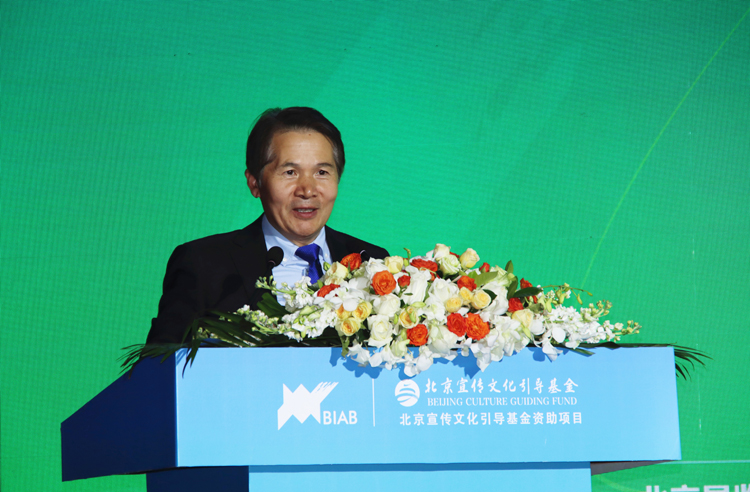
ZHU Hongzi presides over the opening ceremony
When presiding over the opening ceremony, Mr. ZHU Hongzi noted that this edition of the biennale, themed “Coexistence”, echoes the enduring pursuit of humanity for harmonious coexistence and a friendly relationship with nature, while also responding to the world’s urgent need for unity and cooperation. The First International Art Conference serves as a vivid practice of the Global Civilization Initiative through the medium of art, contributing to the building of a community with a shared future for humanity. It will also become an important platform for constructing the academic subjectivity of contemporary Chinese art.
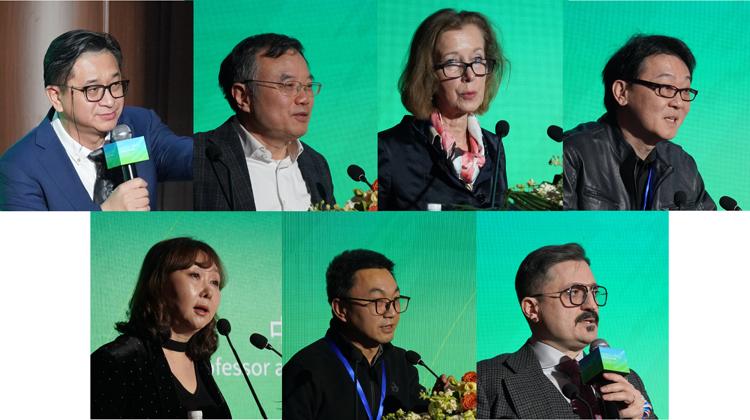
In the first session of “Harmonious Coexistence and Shared Beauty: Artistic Expansion in Local Traditions and from International Perspectives”, six scholars shared their insights under the moderation of Professor DING Ning with Peking University. Ksenija Marinkovic, Director of the Foundation of the Museum of Contemporary Art in Belgrade, Serbia, explored the “continuity” of Balkan art as a cultural crossroads. WANG Shaoqiang, Director of the Guangdong Museum of Art, elaborated on the museum’s path to international integration from the Greater Bay Area. GU Jing, Associate Research Fellow of the Shanghai Museum, illustrated the innovation of cross-cultural exhibitions as rituals of cultural sharing, taking “the Civilization of Ancient Egypt” as an example. Artist LV Yuhui from Taiwan, China discussed how the concept of “harmony in diversity” guides artistic practice. XU Jie, Chinese-American scholar and former Director of the Asian Art Museum in San Francisco, introduced museum practices that connect global perspectives with local communities. Swiss artist Bernard Garo emphasized, from an ecological perspective, that his works with natural materials aim to reveal the climate crisis and raise awareness for protection. Discussant ZHANG Gan, professor of the Academy of Arts and Design, Tsinghua University, provided commentary on each keynote presentation.
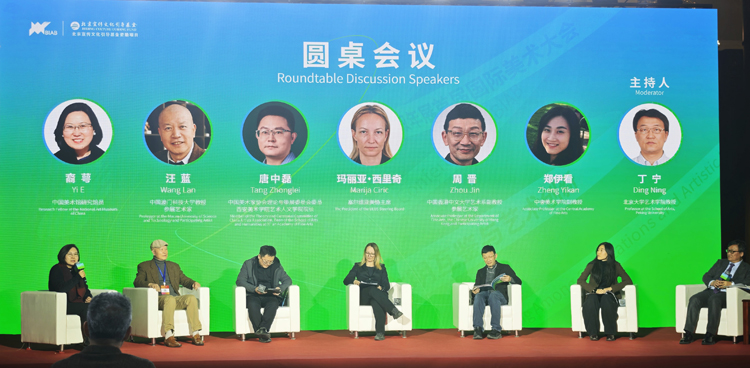
During the roundtable session, Ms.Marija Šerić, President of the Board of the Association of Artists of Serbia , elaborated on the association’s philosophy of embracing diverse media. TANG Zhonglei, Dean of the School of Arts and Humanities at Xi’an Academy of Fine Arts; ZHOU Jin, Associate Professor in the Department of Fine Arts at the Chinese University of Hong Kong; WANG Lan, Professor at the Macau University of Science and Technology; ZHENG Yikan, Associate Professor at the Central Academy of Fine Arts; and YI E, Research Fellow at the National Art Museum of China, respectively explored the global value of Chinese fine arts, the construction of cultural identity in Hong Kong ink art, the historical role of Macao in the mutual exchange between Chinese and western art, case studies of cross-cultural image interpretation, and the transformation pathways of contemporary ink art. The discussion highlighted that, against the backdrop of globalization, deeply exploring local traditions and pursuing creative transformation represent a shared concern and practical direction for advancing dialogue among civilizations.
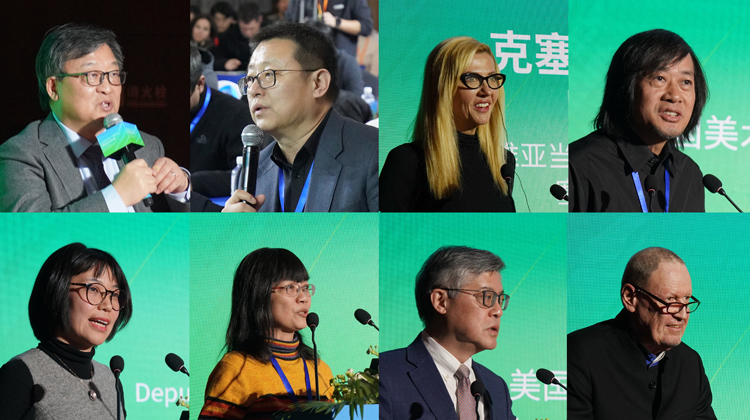
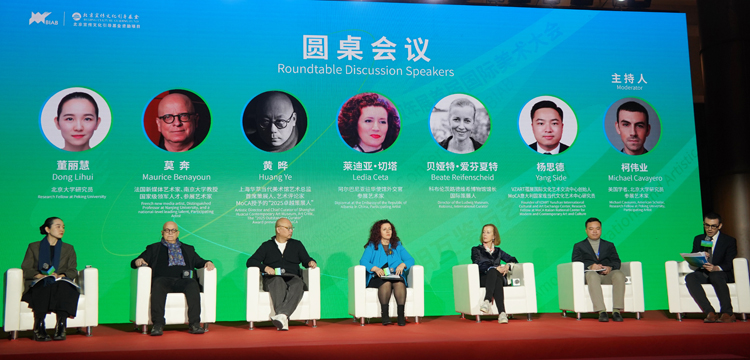
In the second session on “Fluid Contemporaneity and the Construction of Cultural Identity”, five scholars delivered keynote speeches moderated by LI Yang, Dean of the School of Arts at Peking University, focusing on cultural subjectivity and dialogue within the global art landscape. Beate Reifenscheid, Director of the Ludwig Museum in Koblenz, Germany, advocated that art must be rooted in its own cultural traditions to address global and diverse challenges. Lee Chun-yi, Professor at National Taiwan Normal University, critiqued western hegemony on discourse and proposed rebuilding Chinese cultural subjectivity through “contemporary art of ink painting”. SHAO Yiyang, Professor at the Central Academy of Fine Arts, noted that “global contemporary art” signifies a shift in the art structure toward a multi-centered network, with artists becoming cultural agents. LU Mingjun, Professor at Fudan University, analyzed the contemporary significance of the concept “outsider” as a critical medium by interpreting HUANG Yongping’s the Story of the Peach Blossom Spring. Italian scholar Andrea Baldini illustrated, with the graffiti group Yellow Punch as an example, how they utilized Chinese characters to break the monopoly of the Latin alphabet, fostering “cross-regional” culture that preserves local roots amid global flows. Discussant PENG Feng, Professor at the School of Arts of Peking University, provided commentary on each presentation.
During the roundtable session moderated by American scholar Michael Cavayero, Albanian participating artist Ledia Ceta highlighted, based on her personal experiences in different countries, that art serves as a spiritual anchor in flux, emphasizing the value of traditional media, individual sincerity, and self-healing. Curator HUANG Ye explored how cultural subjectivity dynamically emerges through fluidity and negotiation in the context of globalization. Beate Reifenscheid responded by noting that the emotional expression of art can connect different worlds, underscoring the importance of unity. French new media artist Maurice Benayoun explained how digital art explores the essence of human values and transactions through the dialectical relationship of “sublimation and materialization”. Curator YANG Si’de cited the Arte Laguna Prize as an example of how Chinese and Italian art can inspire and coexist with each other through the inheritance of cultural roots and cross-media integration. DONG Lihui, Research Fellow at Peking University, pointed out from a theoretical perspective that contemporary art is shifting from temporal exploration to spatial considerations, as well as cosmopolitan and planetary turns, emphasizing the logic of coexistence.
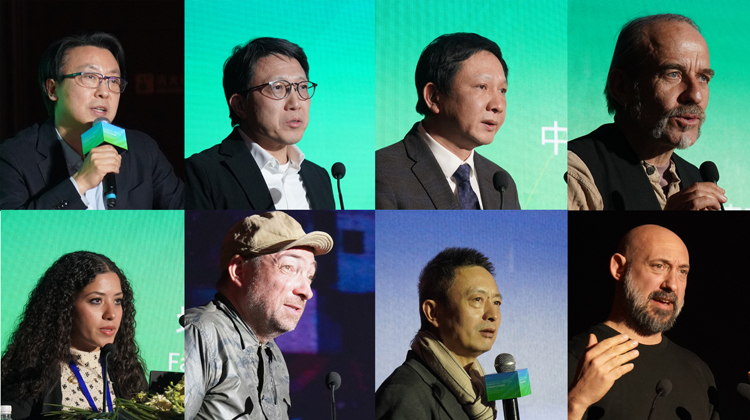
In the third session on “Artistic Ecology and Future Development in the Digital Intelligence Era”, the discussion on the artistic ecosystem in this era resonated with the specially curated digital art exhibition of this biennale. Hosted by Professor YU Yang from the Central Academy of Fine Arts, six guests active in digital art creation, research, and curation shared their academic achievements. YU Xuhong, President of the China Academy of Art, proposed that “integration of art and technology” should empower cultural innovation and industrial upgrading, while also promoting the convergence of Chinese and western approaches to participate in building global art history. Czech artist Jiří Straka pointed out that AI art should go beyond formal imitation and deeply reflect on technological ethics, whereas traditional art maintains its unique value by resisting the pace of the digital age through its materiality. Egyptian artist Rana Ajam emphasized mutual learning among civilizations, with her work the Message aiming to convey universal human values. Australian artist Liam Young used science fiction narratives to highlight environmental issues, calling for attention to future ecology. Professor Fei Jun from the Central Academy of Fine Arts introduced the concept of “hybrid intelligence”, advocating for dynamic human-machine co-creation to balance technological rationality with humanistic spirits through art. Italian digital artist Quayola shared his practice of reconstructing traditional painting and sculpture through technology, exploring the blurred boundaries between reality and virtuality in digitization. Discussant ZHANG Zikang, Director of the Art Museum of the Central Academy of Fine Arts, provided commentary on each presentation.
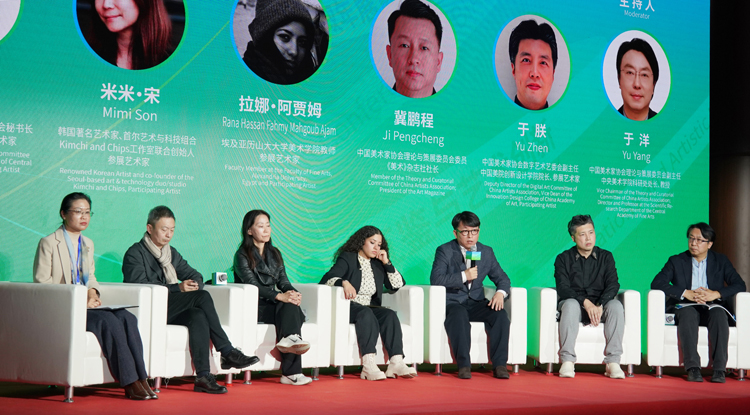
During the roundtable session, Rana Ajam expressed that AI is a powerful tool for cross-cultural exchanges but cannot replace the artist as the creation subject. South Korean artist Hyunjeong Son noted that technology carries inherent power biases, and emphasized the need to reflect on the relationship between humans and others before achieving coexistence. JI Pengcheng, President of the Art magazine, introduced five innovative functions of the Digital Art Museum of the CAA, including online exhibitions and authentication. Professor FEI Jun advocated treating technology as both an object of study and an integral part of life, and highlighted the core role of “sensibility training” in art education. YU Zhen, Dean of the School of Innovative Design at the China Academy of Art, put forward that digital intelligence art has transformed production relations, with artists evolving into collaborative entities in the “human-model-tool chain” and artworks becoming evolving fields. Professor Liu Yanqing, Deputy Dean of Art School at the Northwest University, analyzed the paradigm shift in art brought by generative AI and called for building a new ecosystem that integrates technology and the humanities.
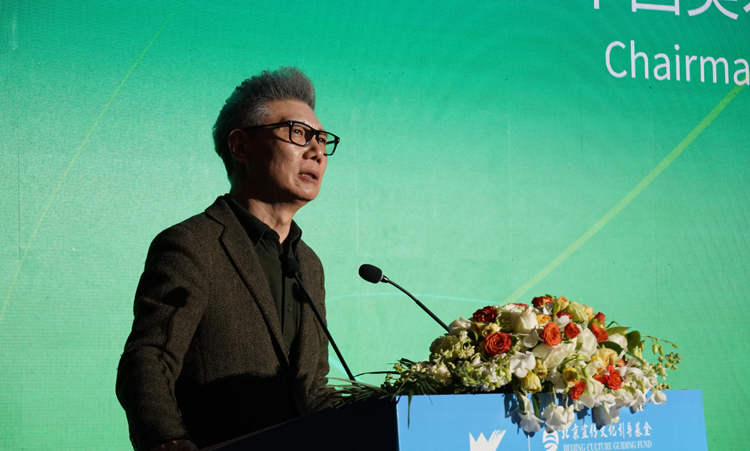
SHANG Hui in his summary of the nearly two-day seminar
In his summary of the nearly two-day seminar, SHANG Hui, Director of the Theoretical and Curatorial Committee of the CAA, pointed out that over the past two decades, the academic discussions of the Beijing Biennale have consistently revolved around two core issues: why and how local art can achieve contemporary transformation, and how to theoretically interpret new phenomena in technology, particularly digital and intelligent art. After synthesizing the key viewpoints shared by the speakers at the conference, Mr. Shang proposed that they can be summarized into three aspects. First, in terms of the content of artistic expression, the focus is on exploring how art can heal conflicts among civilizations and promote coexistence between man and nature. Second, in terms of the form of artistic expression, the emphasis has shifted from the evolution of traditional styles to modes of expression driven by contemporary media transformations, with installation, video, and digital-intelligent art emerging as significant categories in contemporary art. Finally, he emphasized that amid the flourishing development of digital-intelligent art, the spirituality and introspective values embedded in traditional art-- manifested through manual craftsmanship and the passage of time-- should not be overlooked. The mutual learning among civilizations and artistic innovation require both embracing the changes brought by media and safeguarding the timeless core of emotional and spiritual expression.
As a permanent high-level international academic platform of the Beijing International Art Biennale, the International Art Conference will continue to disseminate to the world the academic discourse of the Chinese art community on the construction of contemporary art.